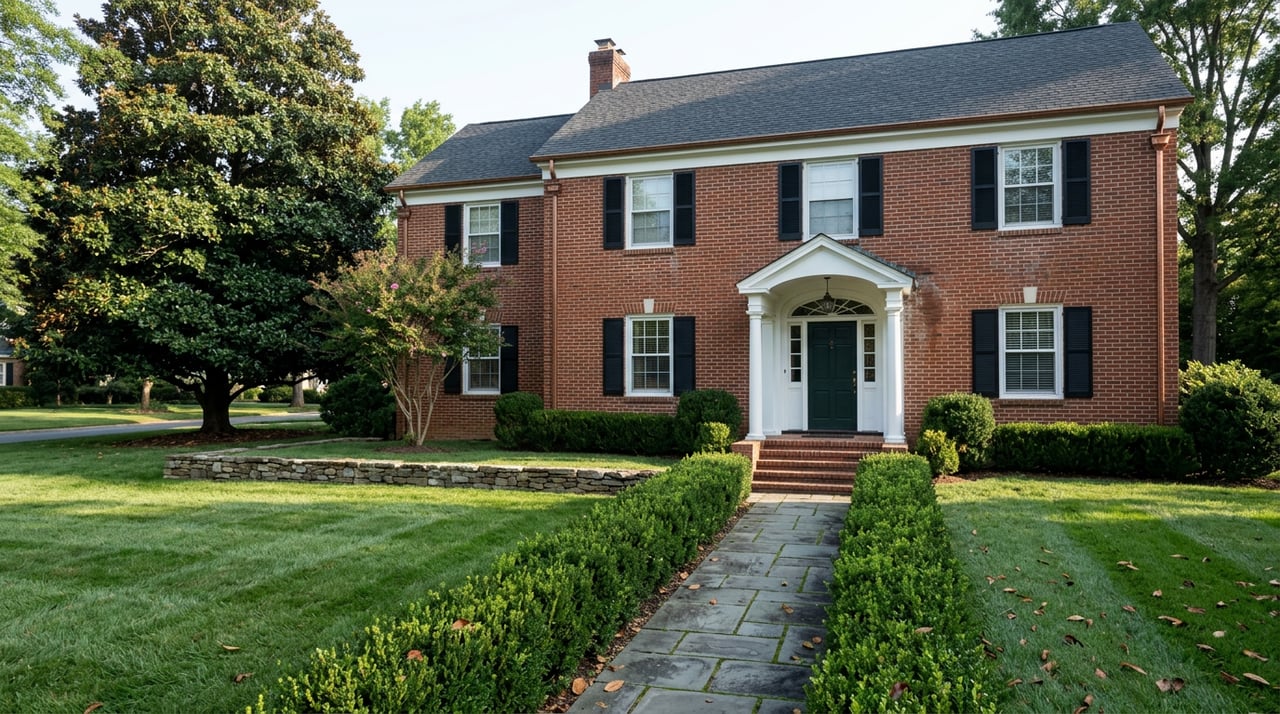
A family we've talked with more than once has faced some version of this: a parent or grandparent owned a house in one of Nashville's older residential pockets, ran it as a short-term rental for years, and passed it down. The house is fine. The furniture is fine. The five-star reviews are fine. What isn't fine, once someone actually reads the fine print, is the assumption that the permit making all that income possible transfers along with everything else.
It doesn't. In most of residential Nashville, it can't.
That single fact reshapes how an heir, a buyer, or a seller should think about a property that currently operates as a short-term rental. The house and the permit are two different assets with two different rules, and only one of them survives a closing.
What "Non-Transferable" Actually Means
Metro Nashville issues two kinds of short-term rental permits: owner-occupied (OOSTR) and not-owner-occupied (NOOSTR). OOSTR covers someone renting a room, or the whole house while traveling, in a home where they actually live. NOOSTR covers a dedicated investment property where the owner doesn't reside.
NOOSTR is the one that produces meaningful income, and it's also the one that dies at the closing table. Under Metro Codes' own permit rules, a change in ownership cancels the permit outright. That includes a sale to a new owner, and it includes moving title from a person into an LLC or trust, or back again. In the standard residential zoning districts that cover most of the city's older neighborhoods, once that permit is gone, a new one is not available. There is no reapplication path.
This isn't a quirk of enforcement. It's baked into the ordinance. New non-owner-occupied permits have not been issued in those residential zones since the city split its rules in 2018, and Tennessee's Short-Term Rental Unit Act, effective that same year, only protects a permit that keeps operating continuously under the same ownership. The protection is real, but it's narrower than most people assume, and it evaporates the moment a deed changes hands.
The Zoning Line the Listing Photos Never Show
The reason this matters so much in Nashville specifically is that the zoning map draws a hard line most buyers never think to check before writing an offer.
| Zoning category | Where you'll find it | New non-owner-occupied permits |
|---|---|---|
| Standard residential (AR2A, R, RS, RM) | Most of East Nashville, Germantown's residential blocks, The Nations, Sylvan Park, 12 South | Not issued. Existing permits may renew, but only until the property is sold or sits idle 30 or more consecutive months. |
| Downtown Code and mixed-use commercial districts | Downtown, SoBro, Rutledge Hill, and pockets of Music Row and The Gulch | Can still be issued as a use permitted with conditions. |
A house in a residential zone that has run as a short-term rental for a decade and a condo in a downtown mixed-use district that has never hosted a single guest are not the same kind of asset, even if they sit two miles apart and look similar on paper. One can be permitted fresh under a new owner's name. The other cannot, no matter how clean its compliance history is.
Nashville's own short-term rental permit page states this plainly for anyone who reads past the first paragraph. Most people evaluating a listing don't get that far before they've already fallen in love with the projected income.
What the Permit Is Actually Worth, and to Whom
Here's where the numbers get interesting. As of early July 2026, Metro Nashville had roughly 6,939 active short-term rental permits, split between about 4,897 non-owner-occupied and 2,042 owner-occupied. Of the more than 11,000 non-owner-occupied permits Nashville has issued since the program began, less than half remain active. The rest lapsed, and in residential zones, a lapsed permit is a permanently closed door.
That scarcity has a price. Analysts who track paired sales across Germantown, East Nashville, and The Nations have estimated that a transferable, properly zoned permit can add tens of thousands of dollars to a purchase price, with the premium varying widely by location and how solid the zoning eligibility actually is. A property sitting in one of the roughly two dozen mixed-use or downtown-code districts where new permits can still be issued commands a real premium over an identical house two blocks away in a standard residential zone, because the income potential in one case is durable and in the other case ends the moment the current owner sells.
Some investors try to work around the non-transferability rule by buying the LLC that holds the property instead of taking a deed transfer, structured through what's called a membership interest purchase agreement. Because the LLC technically keeps owning the property, the theory goes, the permit's grandfathered status survives even though control of the LLC changes hands. This is a real strategy some Nashville buyers use, and it comes with real complications: specialized financing, legal structuring that has to be done correctly before closing, and no application to owner-occupied permits, which by rule must be held by an individual person rather than an entity. It's not a shortcut. It's a specific legal tool that needs a specific lawyer.
The Second Number Buyers Forget
Even a permit that survives intact changes the property's tax picture. Tennessee assesses residential property at 25 percent of appraised value and commercial property at 40 percent, and a state law passed in 2021 moved short-term rental properties into that commercial assessment bracket. On an identical appraised value, that's a meaningfully higher tax bill purely because of how the property is classified, independent of the market value itself.
Layer on the operating side and the math gets more real. Nashville's local occupancy tax runs 7 percent of gross rental receipts plus $2.50 per night, on top of Tennessee's state sales tax, putting the combined tax burden on gross short-term rental income somewhere in the 13 to 15 percent range. Anyone comparing a short-term rental proforma to a long-term rental proforma on the same house needs to run those as two separate models, not one model with a different revenue line. Nashville's property tax calculator is a useful place to see the assessment math directly rather than take someone's word for it.
For an Inherited Property, the Clock Already Started
This is where the estate side of the equation matters most. A family inheriting a Nashville home that a parent or grandparent operated as a short-term rental is inheriting a fragile asset, not a stable one. The grandfather protection that let the original owner keep renewing a residential-zone permit year after year depends on two conditions that an estate can accidentally violate: continuous ownership, and continuous use.
If the property sits vacant for 30 or more consecutive months while an estate is settled, heirs disagree on next steps, or a family simply takes time to grieve and figure things out, the grandfathered status can lapse on its own, with no sale required to trigger it. And once an estate does distribute the property, whether through a sale, a transfer to a trust, or a change in the titled owner, the permit's protection ends there too.
None of this is a reason to rush a family decision about a loved one's property. It's a reason to understand, before pricing or marketing that property, exactly what is and isn't for sale. The house has a value on its own. The income history has informational value to a buyer evaluating cash flow. The permit itself, in most of Nashville's residential neighborhoods, has no value to anyone but the current owner, because it cannot be given, sold, or willed to the next one.
A Few Questions That Come Up Often
If I buy a house with an active NOOSTR permit, can I just reapply for my own? In standard residential zones, no. New non-owner-occupied permits are not issued in those districts at all, for anyone, regardless of the property's history. The only path to non-owner-occupied income in those zones is inheriting an existing, unbroken grandfathered permit, which a sale specifically breaks.
Does any of this apply to owner-occupied permits? Differently. An owner-occupied permit is tied to whoever actually lives at the property as their primary residence, so a new owner-occupant applies fresh rather than inheriting anything. The eligibility resets with the person, not the property.
What if the seller holds the property in an LLC? It's possible to structure a purchase around buying the LLC's membership interest rather than the deed itself, which can preserve a grandfathered permit's protection. This requires legal guidance before any contract is signed, since doing it incorrectly voids the very protection it's meant to preserve.
If you're weighing a Nashville property that comes with short-term rental history attached, or you're settling a family estate where that history needs to be priced accurately rather than assumed, it's worth a direct conversation before you list or make an offer. Bainbridge Realty Group has spent more than three decades handling exactly these kinds of transitions across Middle Tennessee, and we're glad to walk through what your specific property, zoning, and permit status actually mean before you put a number on paper. Reach out when you're ready to talk it through.