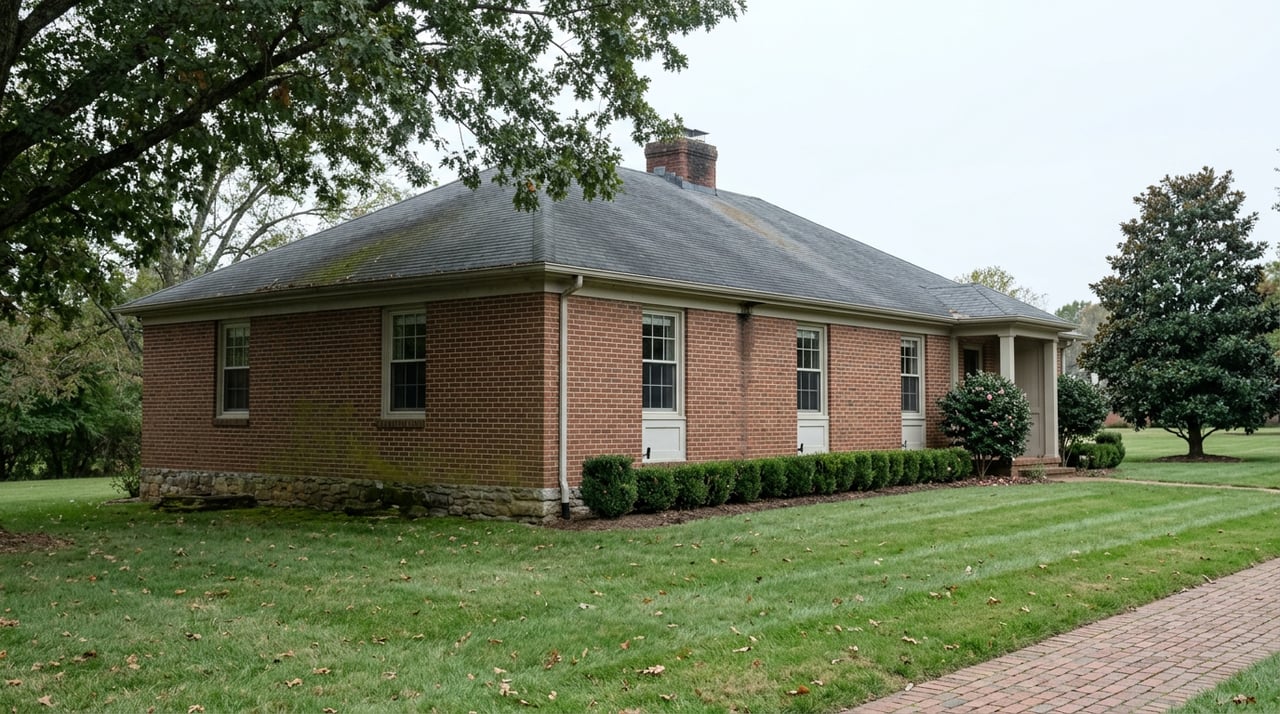
If you own an original ranch in West Meade and you're about to schedule an inspection before you list, the market data you'll see quoted back to you is going to be misleading in a specific and predictable way. Over the twelve months ending in December 2025, the median sale price in West Meade rose to $1.1 million, up 9.6 percent from the year before. In that same window, the median price per square foot fell 18.9 percent. Those two numbers should not move in opposite directions in a market this small. When they do, it means the house that's setting the median isn't the house you're selling.
This matters most at the exact moment an inspection report lands on the kitchen table. A seller with a 1950s brick ranch on a wooded acre lot who hears "West Meade is up nearly 10 percent" and assumes that applies to their unrenovated systems is about to price the house wrong. A buyer comparing an inspection report against a listing price is going to misread what the comps actually support. The gap between those two numbers is the story, and it starts with what's actually sitting on the ground in West Meade right now.
Two Very Different Houses on the Same Street
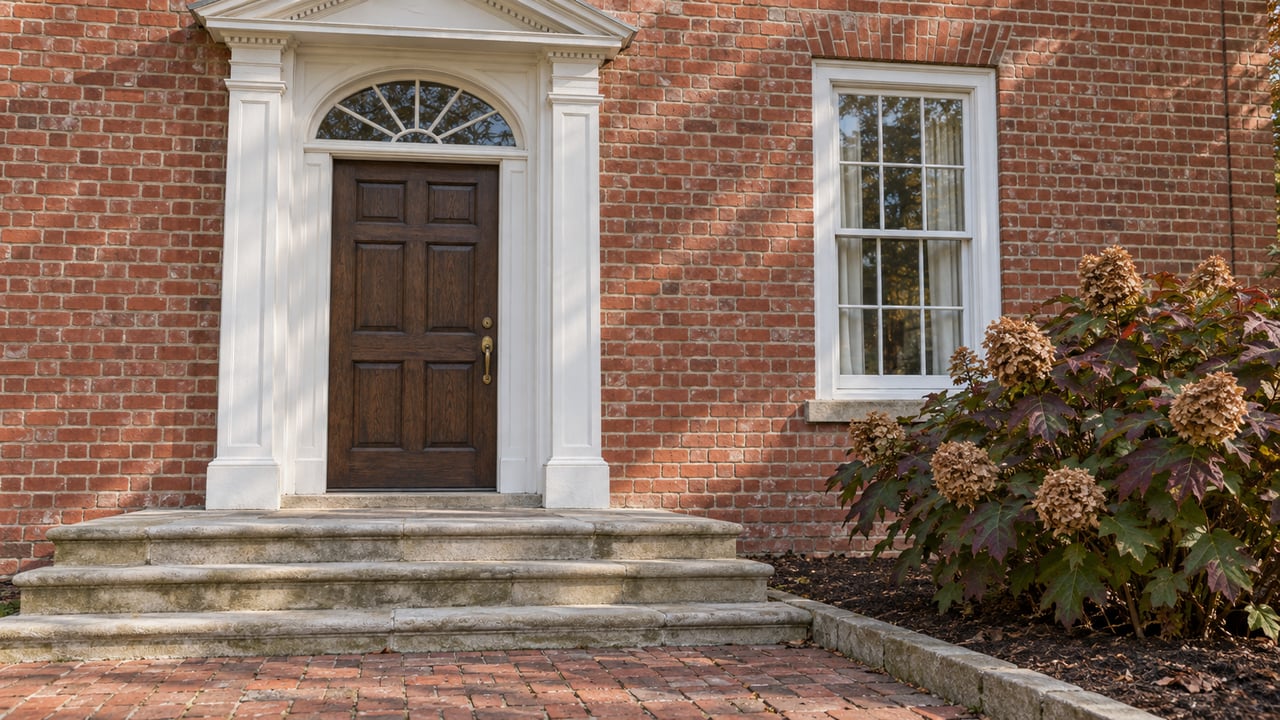
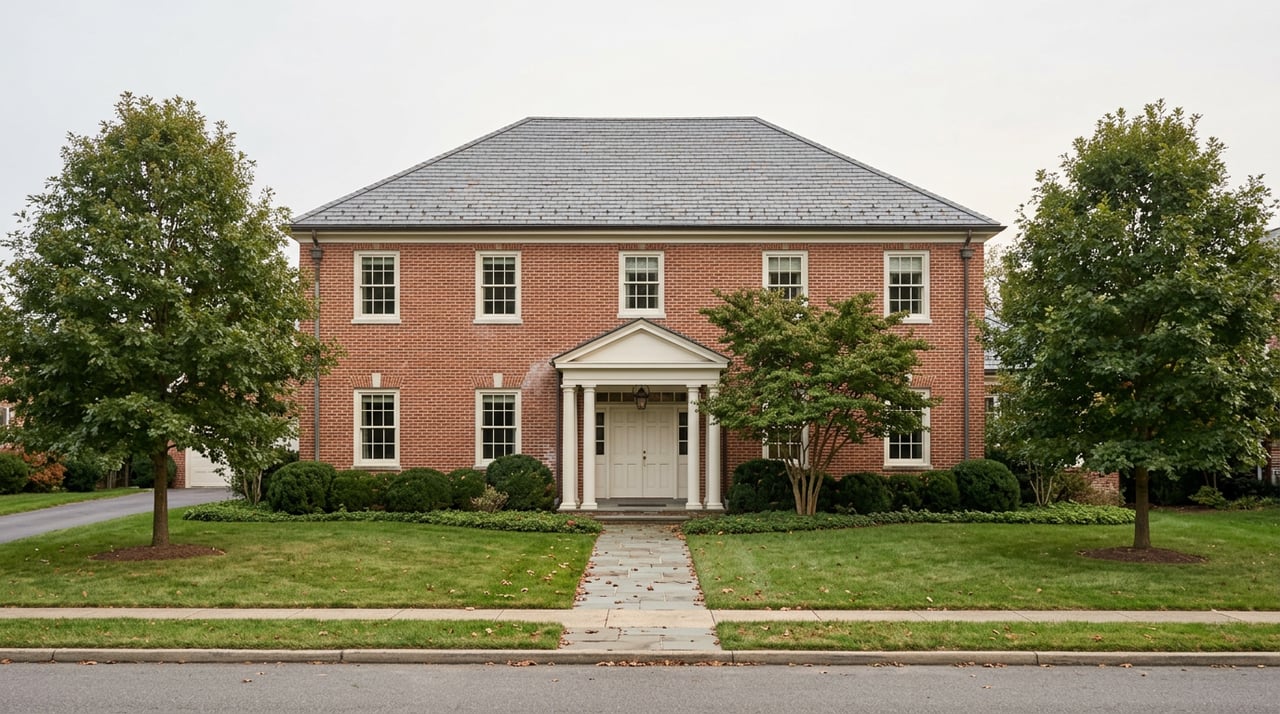
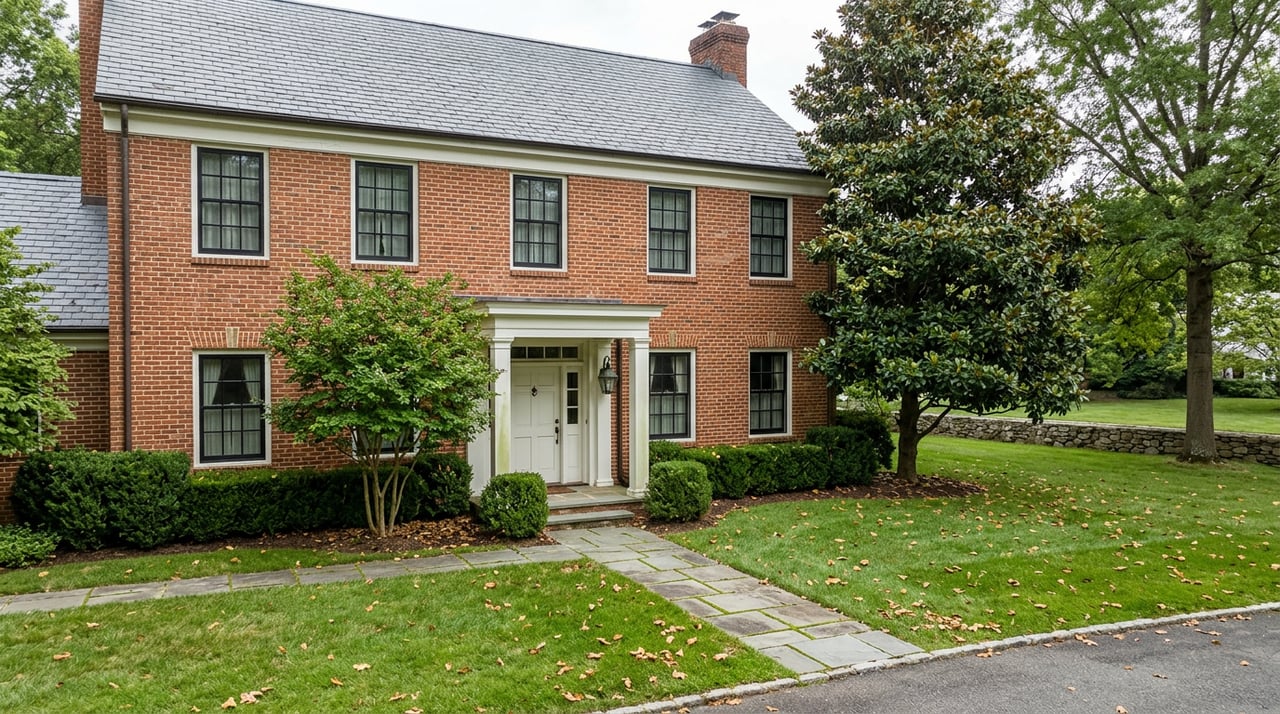
West Meade was subdivided after 1944 and built out mostly through the postwar boom, which is why the housing stock still leans heavily toward homes constructed between 1940 and 1969. Original brick ranches on generous lots are the neighborhood's signature. But the same streets that carry those original homes also carry newer construction from the 2000s forward, custom builds that replaced a teardown or filled a long-vacant parcel. Drive any given block and you're looking at a 1950s ranch with its original systems next to a home built in the 2000s or later, with spray foam insulation and a tankless water heater. Both are "West Meade." Neither one tells you much about the other's value.
That mix is exactly why a citywide inspection resource serving the broader Nashville market makes a point of noting that inspectors routinely move between a 1950s ranch, a 1990s two-story, and a brand-new build on the same street in the same afternoon, each one demanding a completely different inspection priority list. Older homes tend to show long-term settlement and a patchwork of partial system updates layered over decades. Newer builds raise different questions entirely, mostly about installation quality and drainage. West Meade is a case study in that pattern, not an exception to it.
Here's a snapshot of where the numbers stood as of December 2025, the most recent closed data available at the time of writing:
| Metric | December 2025 | Change year over year |
|---|---|---|
| Median sale price | $1.1 million | Up 9.6% |
| Median price per square foot | $408 | Down 18.9% |
| Median days on market | 59 | Down from 111 |
| Homes sold in the month | 30 | Up from 20 |
Days on market cutting almost in half while volume grew tells you buyer demand is real. But a rising median paired with a falling per-square-foot number tells you the demand is concentrated on larger homes, whether newly built or substantially expanded, and that the original ranch stock is not appreciating at the same rate on a like-for-like basis. The median is being pulled upward by square footage, not by every house getting more valuable per square foot it already has.
What Actually Shows Up in the Inspection
If your home is one of the original 1940s through 1960s ranches, the inspection is unlikely to surprise anyone who has lived in the house for more than a few years, but it will surprise a buyer who has only seen comps from newer construction down the street. The recurring findings in homes of this era center on a handful of systems: original electrical panels that predate current code and often need a full upgrade rather than a patch, plumbing that has usually seen at least one partial replacement but rarely a full repipe, crawlspaces that need moisture control or a full retrofit and waterproofing, and roofs and HVAC systems that are on their second or third cycle since the home was built.
None of that makes a West Meade ranch a bad purchase. It makes it a purchase where the inspection report and the renovation scope need to be priced into the offer, not treated as a footnote after the fact. Listings that have already done this work, replacing original windows, retrofitting a crawlspace, updating electrical and plumbing throughout, consistently lead with those upgrades because buyers in this market have learned to ask for them specifically. That's a meaningful shift from a few years ago, when finish quality alone did most of the selling.
Why the Zoning Makes This a Real Choice
The reason West Meade's market can sustain both a preserved original ranch and a full rebuild on the same block comes down to the lot itself. Most of the neighborhood is zoned RS40, Nashville's designation for low-density single-family use with a minimum lot size of 40,000 square feet, and in practice most parcels here run to an acre or more. That's not a marginal detail. It means a buyer who gets an inspection report back showing an aging roof, an undersized electrical panel, and a crawlspace that needs work isn't choosing between "fix it" and "walk away." There's a third option that's genuinely on the table: keep the lot, keep the setting, and build new.
That option is exactly what's showing up in the market data. When a large enough share of buyers can credibly choose to rebuild rather than renovate, the homes that get built new or expanded substantially will always outpace the median price of the surrounding original stock, because they're capturing the value of the land at a scale the older, smaller footprint never could. The falling price per square foot isn't a sign of weakness in West Meade. It's a sign that the neighborhood's original 1,800-plus homes are aging at a different pace than the lots underneath them can support.
Reading the Comps Correctly
The practical takeaway for anyone about to transact in West Meade is straightforward but easy to miss. If you're pricing an original ranch for sale, the citywide or even neighborhood-wide median is the wrong anchor. You need comps that share your home's construction era and, ideally, its renovation history, not just its address. A buyer's agent who pulls the median $1.1 million figure and applies it uncritically to an unrenovated 1960s ranch on a similar lot is going to produce a number neither side can defend once the inspection comes back.
The same logic runs in reverse for buyers. If a listing's price looks aggressive relative to its square footage, ask directly whether that premium reflects the lot, the systems, or genuinely new construction. In a market where those three things are diverging as fast as West Meade's data suggests, the answer changes the negotiation entirely.
This is also where an inspection contingency earns its keep. In a market compressing from 111 days on market to 59, there's real pressure to move fast and waive contingencies to compete. West Meade's mixed-era housing stock is precisely the setting where that pressure is most likely to backfire, because the gap between an original ranch and a rebuilt neighbor is large enough that skipping a full inspection means guessing at exactly the systems most likely to need real money.
A Few Questions Worth Asking Before You List or Offer
Does a rising median mean my original ranch is worth more than last year? Not necessarily on a per-square-foot basis. The median in West Meade is being lifted by larger and newer homes. Your home's value should be benchmarked against comps that share its construction era and system history, not the neighborhood-wide figure.
Is it more common now to renovate an original ranch or replace it? Both are active strategies in West Meade right now, which is part of what's driving the divergence between median price and price per square foot. The large, RS40-zoned lots make a full rebuild a realistic option in a way it isn't in denser Nashville neighborhoods.
Should I still get a full inspection in a market moving this fast? Especially here. The speed at which homes are selling has nothing to do with how consistent the underlying systems are from one house to the next on the same street.
If you're weighing whether your West Meade property is a renovation candidate or a rebuild candidate, or you're comparing a listing's price against what its systems and lot can actually support, Bainbridge Realty Group has spent decades reading exactly this kind of market against construction and renovation realities on the ground. You can start with a home valuation or explore more about the West Meade market before you make your next move. Reach out when you're ready to talk specifics.